






















Aberje launches the study Reputation Value 2026 and highlights the demand for coherence and consistency in stakeholder relationships
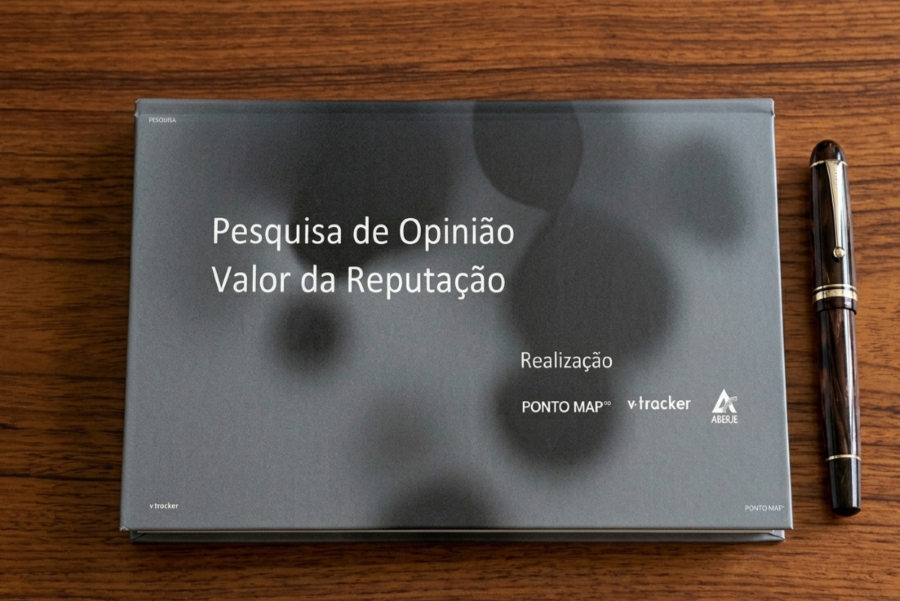
Aberje has launched the study Reputation Value 2026, available exclusively to its member organizations, which analyzes the role of this asset in the relationship between companies and public opinion. Conducted in partnership with member company Ponto MAP and V-Tracker, the study brings together quantitative data and insights into how reputation influences decisions, trust, and public preference, as well as its impact on the competitive and institutional dynamics of organizations. Three additional studies focusing on other audiences—journalists, communication professionals, and companies—will also be released.
The findings indicate that reputation is recognized as a determining factor in shaping opinions about brands and institutions. For most respondents, it serves as an initial reference point for judgment, with the most trusted brand tending to be the one with the strongest reputation, not necessarily the most well-known. The study reinforces that institutional discourse and practice must be aligned, with quality, relationship management, and the ability to deliver on promises ranking among the most valued attributes—reputation is not a “blank check.”
Another key aspect highlighted is the role of reputation as a competitive differentiator and a driver of development, with effects that can contribute to building trust at a broader scale, facilitating agreements, partnerships, and even shaping perceptions of sectors and business environments. On the other hand, the study underscores reputational vulnerability in times of crisis: scandals involving a company tend to impact the image of the entire sector.
The analysis by segments and social classes shows that the importance attributed to reputation varies depending on the context. Sectors such as healthcare, food and beverages, banking, durable consumer goods, and technology rank among those most sensitive to the issue. In the breakdown by social class, the study indicates that the sectors in which reputation is considered most relevant differ across groups: among respondents in classes AB and DE, the healthcare sector stands out as the most important, while in class C, the emphasis falls on food and beverages.
Methodology
The study was conducted on March 19, 2026, with 1,548 respondents across 614 municipalities in all 27 Brazilian states. Data collection was carried out online via a smartphone application, with participants aged 18 and over. The sample followed quota controls proportional to the Brazilian population in terms of age group, gender, macro-region, and socioeconomic level, based on the 2022 Census. The margin of error is 2.4%, with a 95% confidence level.
ARTIGOS E COLUNAS
Paulo Nassar Conhecimento, imaginação e complexidadeCarlos Parente Eu estava aqui o tempo todo, só você não viu!Paulo Nassar A comunicação organizacional entrou definitivamente na era da legitimidade
Destaques
- Study on polarization examines its impact on corporate communication
- Election cycle heightens communications and public affairs challenges across the Americas
- BRpr Highlights Research on the Evolution of Communication and Global Industry Trends
Notícias do Mercado
- Study on polarization examines its impact on corporate communication
- Election cycle heightens communications and public affairs challenges across the Americas
- BRpr Highlights Research on the Evolution of Communication and Global Industry Trends