






















Responsible Communication in a Changing World: Three Questions Abuja Leaves Us With
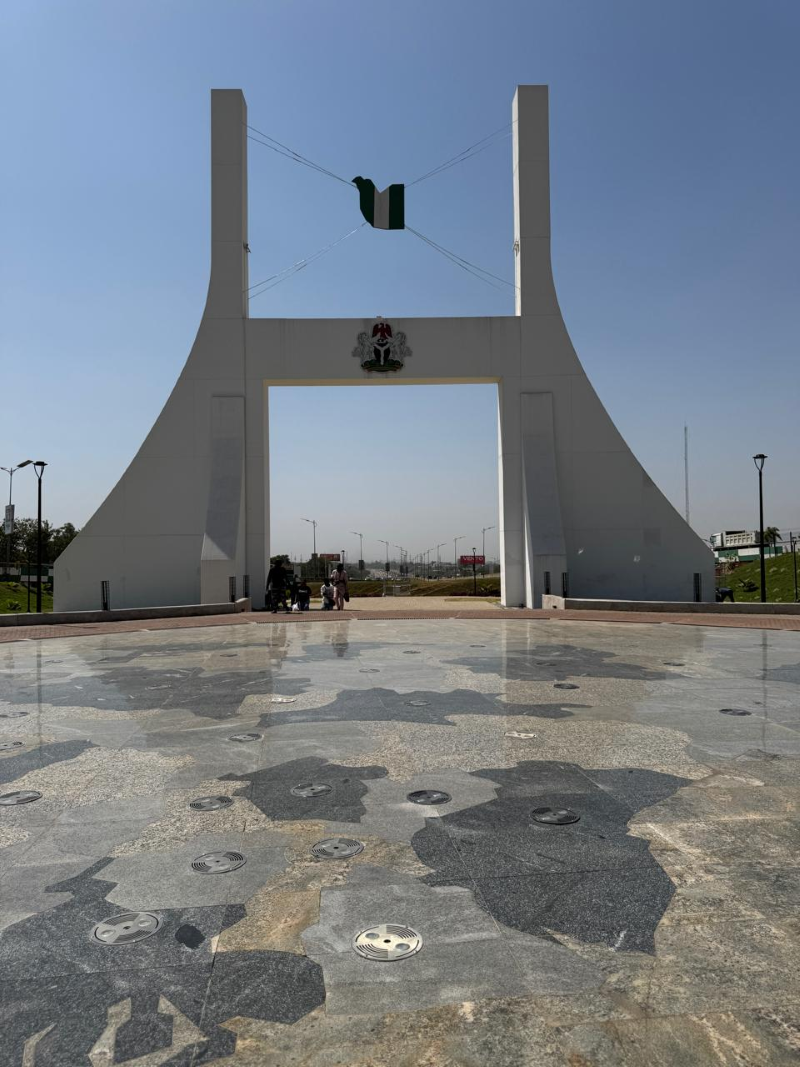
There are international gatherings that end with speeches, photographs, declarations, and promises of cooperation. Others, more rarely, manage to go beyond their official programs and raise questions that remain long after participants have returned to their home countries. The World Public Relations Forum (WPRF) 2026, held in Abuja, Nigeria, from November 15 to 22, has the potential to belong to this second category.
Organized under the leadership of the Global Alliance for Public Relations and Communication Management, in collaboration with the African Public Relations Association (APRA) and the Nigerian Institute of Public Relations (NIPR), the Forum adopted the theme Responsible Communication: The Voice of the World.
The choice of both theme and location is far from accidental. In a world marked by wars, inequalities, crises of trust, technological transformations, and disputes over institutional legitimacy, discussing responsible communication means examining the very quality of the relationships between organizations and society.
Abuja also offers a particularly significant perspective. By hosting the first WPRF to take place in West Africa, Nigeria helps shift the geographical and symbolic center of a debate historically dominated by European and North American perspectives.
The program brings together representatives of governments, corporations, universities, professional associations, and international organizations. It addresses issues such as artificial intelligence, disinformation, democracy, sustainable development, cultural diversity, global security, and the education of new generations of communication professionals.
Yet, given such a broad agenda, perhaps the Forum’s most important contribution lies not in the answers it provides, but in the questions it compels us to ask.
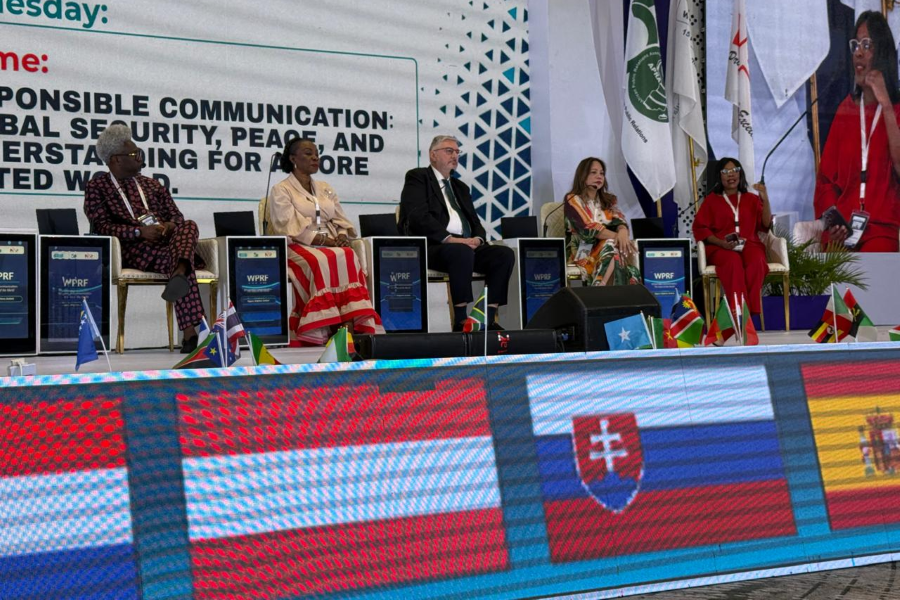
Three of these questions deserve particular attention.
Does Responsible Communication Transform Organizations or Merely Their Narratives?
The first question goes to the heart of a contradiction that has accompanied the history of public relations and organizational communication.
For decades, companies and institutions have developed sophisticated communication structures to build favorable images, manage reputations, establish relationships, and gain public recognition. These activities have contributed to the professionalization of the field, but they have also sustained a persistent ambiguity: communicating well does not necessarily mean acting responsibly.
An organization may develop convincing sustainability campaigns while maintaining environmentally harmful practices. It may publicly defend diversity without changing internal structures of exclusion. It may present itself as a defender of human dignity while simultaneously tolerating undignified working conditions.
In such situations, communication does not transform reality. It merely produces a desirable representation of it.
The issue becomes more complex when we consider the difference between reputation and social legitimacy.
Reputation concerns the evaluations that stakeholders develop about an organization over time. Legitimacy, as Mark Suchman demonstrates in his institutional studies, involves the social recognition that certain actions are appropriate within shared systems of values, norms, and beliefs.
An organization may enjoy a good reputation among certain stakeholders and still face profound questions about the legitimacy of its activities.
For this reason, responsible communication cannot be reduced to a more sophisticated form of reputation management.
It requires participation in decision-making, the ability to question established practices, a willingness to listen to dissenting stakeholders, and the institutional courage to acknowledge contradictions.
This shift also changes the role of public relations professionals. Rather than simply managing messages, they must become active participants in governance processes, helping organizations understand the social consequences of their decisions.
Responsible communication begins before the message. It begins at the moment a company or institution decides how to exercise its power.
This is where the debate in Abuja faces its greatest challenge: demonstrating that responsibility is not merely an attribute of communication, but an ethical and political requirement placed upon organizations themselves.
Is the World Truly Willing to Listen to New Voices?
The second question emerges from the very territory hosting the Forum.
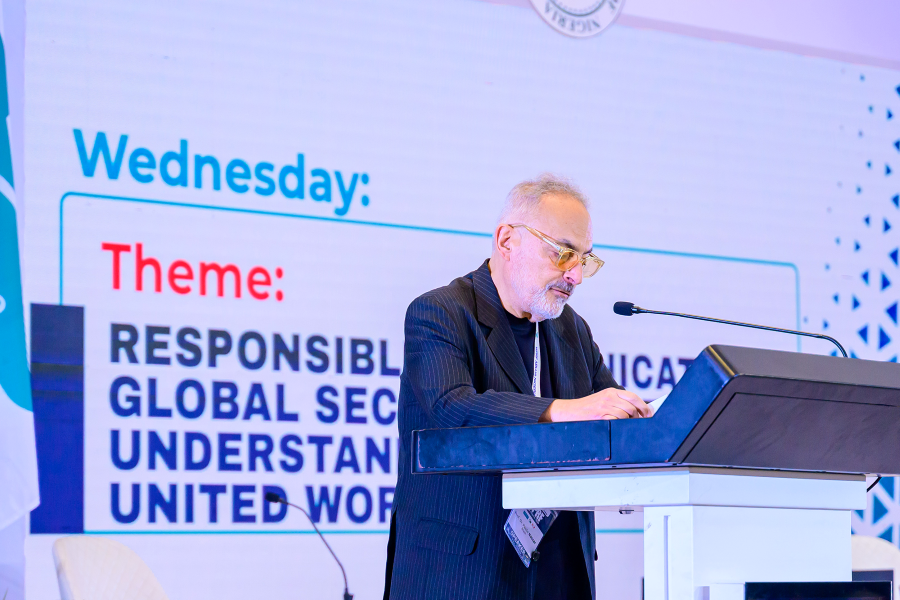
Holding the WPRF in Abuja represents an important milestone in the internationalization of public relations. However, increasing the participation of countries and continents does not automatically transform the structures through which knowledge is produced.
For a long time, concepts, professional models, and standards of excellence have circulated internationally from academic and institutional centers located predominantly in the Global North.
These contributions are valuable and remain indispensable. The problem arises when particular historical experiences are treated as universal references, while other ways of understanding society, organizations, and communication processes are placed in a secondary position.
Africa offers deeply significant experiences of community life, intercultural negotiation, oral traditions, collective memory, and the creation of social bonds. Latin America, in turn, has made important contributions to grassroots communication, critical education, cultural studies, and the understanding of structural inequalities.
These experiences should not be incorporated merely as local examples of theories developed elsewhere. They can contribute to transforming the theories themselves.
The challenge is to move from geographical representation to epistemological participation.
This requires understanding interculturality not as a superficial celebration of differences, but as a relationship in which distinct systems of knowledge meet, engage in dialogue, and may ultimately transform one another.
There is an important anthropological dimension to this discussion.
Organizations do not exist outside culture. They are constituted by narratives, memories, symbols, rituals, and systems of values that shape the experiences of their members and their relationships with society.
The same communication practice may produce different meanings depending on the historical, cultural, and political context in which it takes place.
An institutional relationship model designed for a politically stable society may not adequately respond to the needs of communities marked by conflict, inequality, or experiences of exclusion.
Listening, therefore, must go beyond the technical procedure of collecting opinions. It must become an institutional commitment to recognizing others as legitimate producers of knowledge and meaning.
In this context, the choice of Abuja may represent something far more profound than the geographical decentralization of an international events calendar.
It may contribute to the recognition of a more plural geography of communication thought.
But this will depend on the ability of professional organizations, universities, and corporations to transform diversity among participants into genuine diversity of perspectives, intellectual references, and decisions.
The world does not simply need more voices speaking. It needs institutions capable of listening to them.
How Can the Symbolic Capital of Major Events Be Transformed into Lasting Change?
The third question concerns legacy.
Major professional gatherings are particularly rich events from an anthropological perspective.
They bring together people from different countries, establish ceremonies, honor individual and collective achievements, celebrate shared values, and create experiences of belonging.
These events can be understood through the contributions of Émile Durkheim and Victor Turner concerning rituals and the construction of collective bonds.
For several days, professionals who live in different realities come to share spaces, symbols, speeches, and expectations. Networks of relationships are formed, commitments are renewed, and an international professional identity is reaffirmed.
The WPRF 2026 clearly expresses this ritual dimension.
Its program honors individuals who have contributed to the history of public relations, including John Paluszek, Toni Muzi Falconi, Prita Kemal Gani, Irene Lungu Chipili, and Nigerian writer Wole Soyinka, winner of the Nobel Prize in Literature.
I was deeply moved by the tribute dedicating November 18 to my academic and professional journey, built over several decades at the University of São Paulo and Aberje. More than an individual recognition, I understand this gesture as an acknowledgment of Brazil’s contributions to organizational communication, particularly research connecting communication, memory, narratives, and anthropology.
These tributes fulfill an important function. They allow a professional community to recognize its leading figures, preserve its memory, and transmit values to new generations.
But rituals have a characteristic that deserves attention: their symbolic power does not, by itself, guarantee lasting transformations.
An event may generate enthusiasm, solidarity, and ambitious declarations without significantly changing the practices of participating institutions.
It is therefore necessary to distinguish the event itself from its legacy.
An event brings people together at a particular time and place. A legacy endures when lived experiences are transformed into knowledge, relationships, commitments, and practices capable of extending beyond the event’s temporal boundaries.
In the case of Abuja, such a legacy could be built through international research, educational programs, cooperation initiatives between countries, mechanisms for evaluating responsible communication, and verifiable institutional commitments.
The program includes discussions on professional declarations and the creation of educational initiatives, including a university dedicated to public relations and leadership in Nigeria. These proposals have the potential to generate continuity, but their significance will depend on their implementation.
I also consider closer cooperation between Africa and Latin America particularly promising.
Institutions such as Aberje, universities, and professional associations from both continents can develop joint projects on social legitimacy, interculturality, responsible communication, and organizational transformation.
The education of new generations of communication professionals must, in turn, incorporate a broader understanding of professional responsibility, bringing together technological competencies, ethical reflection, critical thinking, and humanistic knowledge.
The question of legacy is therefore also a question of time.
What will remain when the speeches have been forgotten, the halls are empty, and the photographs have stopped circulating?
The answer will depend less on the intensity of the celebrations and more on the ability to transform the commitments made into institutional practices.
From the Voice of the World to the Responsibility to Listen and Act
The three questions emerging from WPRF 2026 are deeply interconnected.
The first questions the consistency between organizational discourse and behavior.
The second examines the power structures that determine which voices are recognized and which forms of knowledge achieve international legitimacy.
The third considers the capacity to transform symbolic events into changes that endure over time.
Together, they point toward a necessary transformation in the field of public relations.
In an environment marked by a relentless flood of information, technological acceleration, and the multiplication of competing narratives, perhaps communication’s greatest challenge is not to endlessly expand its capacity to speak.
Perhaps it is to recover its capacity to foster understanding, recognition, and responsibility.
Artificial intelligence makes this question even more urgent. Never has it been so easy to produce messages, images, speeches, and representations. Yet the abundance of content does not guarantee the quality of human relationships or the legitimacy of institutions.
Technology can expand organizations’ communication capabilities, but it cannot replace their moral and social responsibilities.
Likewise, no narrative, however sophisticated, can indefinitely sustain an organization whose practices contradict the values it proclaims.
The gathering in Abuja therefore invites us to reconsider the very meaning of responsible communication.
It is not enough to communicate the truth when doing so is convenient. We must create institutional conditions in which the truth can be acknowledged, even when it reveals contradictions.
It is not enough to declare respect for diversity. We must allow different cultures, experiences, and forms of knowledge to participate in decision-making.
It is not enough to celebrate responsibility at international conferences. We must translate it into everyday behavior, governance, and social commitment.
Perhaps the most enduring contribution of WPRF 2026 lies precisely in this potential shift: from communication as an instrument for legitimizing organizations to communication as an active force in their transformation.
After all, the voice of the world is not a single voice. It is made up of millions of human experiences, many of them historically silenced, demanding recognition, dignity, and participation.
Truly responsible communication begins when these voices cease to be merely recipients of messages and begin to influence decisions.
The future of public relations will depend not only on our ability to communicate the world as it is more effectively, but also on our willingness to help build a better world.

ARTIGOS E COLUNAS
Paulo Nassar A comunicação responsável diante do mundo: três perguntas que Abuja nos deixaPaulo Nassar A dignidade como ponto de partidaCleide Cavalcante Quando o campo passa a publicar: como uma indústria do agro aproximou fábrica, escritório e lavoura com a comunicação digital
Destaques
- Paulo Nassar’s article examines responsible communication in light of the 2026 World Public Relations Forum
- Study on polarization examines its impact on corporate communication
- Election cycle heightens communications and public affairs challenges across the Americas
Notícias do Mercado
- Paulo Nassar’s article examines responsible communication in light of the 2026 World Public Relations Forum
- Study on polarization examines its impact on corporate communication
- Election cycle heightens communications and public affairs challenges across the Americas